
March was a pretty chaotic month. The risk of unemployment feels salient now, to say the least. But even in a month that feels like I worked harder than I’ve ever worked before, I am heartened by how many books and movies I have to talk about. It’s good to know that at a time when I have the least amount of bandwidth as I ever will have, I still have time for art. I still have time for magic. So let’s get into it.
Books
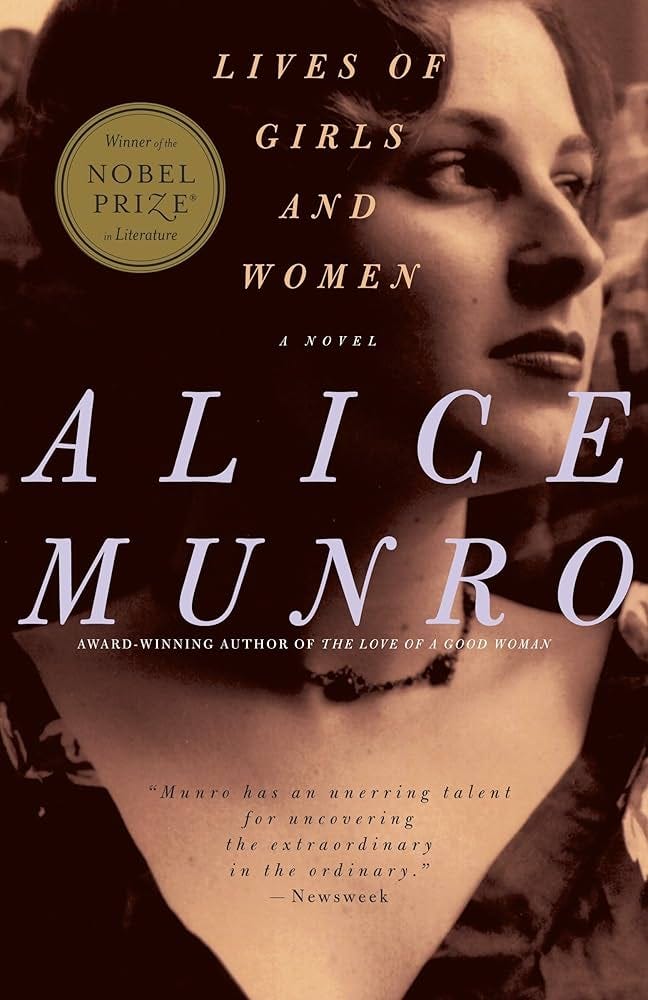
Lives of Girls and Women (Alice Munro, 1971). I have had an essay about Alice Munro in my drafts for longer than I’ve had a Substack. Her stories pulled me back into reading, after years when I wouldn’t pick up a book. But they also drive me to neurosis by putting me in the minds of pathologically detached narrators who can’t connect with anyone in a normal way, and convincing me that I should give up on people. I love them, I hate them, I can’t live with them, I always come back to them. For six months, I didn’t touch a Munro story, my longest break since I first discovered her.
Lives of Girls and Women was a good one to come back to. It is her only novel. It is technically a novel, in the sense that it is a book about the life of Del Jordan of Jubilee, Ontario. But it really is just a collection of short stories about Del. We experience her childhood with her overeducated mother, her parochial father, her eccentric uncles and aunts. In adolescence, we see her explore religion, love, sexuality. And while Del has the detachment of an archetypal Munro narrator, she also captures the magic of growing up in a way that I found beautiful.
“If we had been older we would certainly have hung on, haggled over the price of reconciliation, explained and justified and perhaps forgiven, and carried this into the future, but as it was we were close enough to childhood to believe in the absolute seriousness and finality of some fights, unforgivability of some blows. We had seen in each other what we could not bear, and we had no idea that people do see that, and go on, and hate and fight and try to kill each other, various ways, then love some more.”
52 Stories by Anton Chekhov (trans. Richard Pevear and Larissa Volokhonsky, 2020). In Shortstoryland, all roads lead to Chekhov. He is also the author of the first short story I ever loved, The Bet. So I figured it would be a good idea to remedy my education, and read more of his stories.
I, uh, didn’t think most of them were very good. I’m sure there are people who could spend entire careers writing about the stories I found shallow, and when it comes to Chekhov, I feel afraid to say anything at all. But I didn’t mind reading those stories, because they were interspersed with incredible stories. Perhaps many others have had the same experience as me, but we would never agree on which stories were mediocre and which were incredible. I guess that’s what makes a writer into an adjective, to have a canon that touches everybody in some particular way.
What unified the Chekhov stories that struck me was the power of compassion. So many of his characters suffer agonizingly, but they can experience at least a moment of grace, and they can be saved by it. The Beggar is about a drunk beggar who is given a job chopping wood, but he’s unable to even lift the axe. He is saved by a compassionate cook who secretly chops the wood on his behalf, until he is inspired to stop drinking. I’m concurrently reading Dubliners by James Joyce for a book club, and in Dubliners, nobody is ever saved. Joyce doesn’t seem to believe that people can really change, but Chekhov clearly does.
When asked about his writing process, Chekhov allegedly picked up an ashtray and said, “Look at this. Tomorrow I will write a story called ‘The Ashtray’.” It’s an appealing idea – that when you observe the world clearly enough, everything is worth writing about. There is nothing that is below grace. “To a chemist, nothing on earth is unclean,” he wrote in his letters. “A writer must be as objective as a chemist.”
Movies
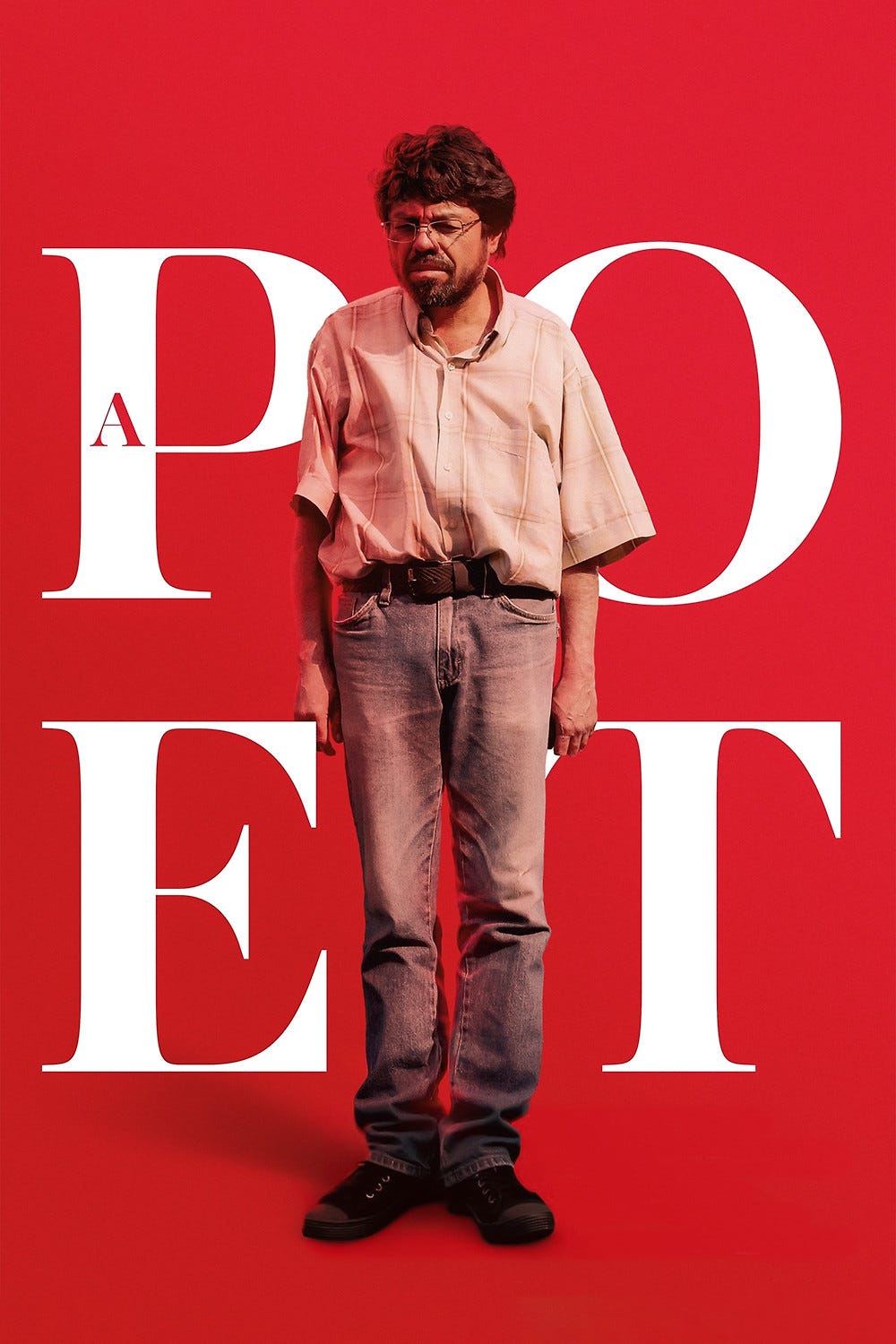
A Poet (Simon Mesa Soto, 2025). A Poet is incredibly funny. There is not a single joke in the movie, not a single moment where any character tries to be funny. And yet they are, because they take themselves so goddamn seriously, and we know they’re full of shit. Because, of course, they are poets.
Oscar, our protagonist, is not a very good poet. Nobody respects him. He published his best work ten years ago and has been over the hill ever since, living with his mother, sponging off her retirement checks, and refusing to get a job because he thinks it will interfere with his poetic inspiration. The real poet is his high-school student Yurlady. She walks through the world, observes a beautiful tree, and writes a poem about it. She looks at the moon and writes a poem about it. Like Chekhov, she could pick up an ashtray and write a poem about it. But unlike Oscar, she has no poetic misery. She’s a normal teenager. She doesn’t even want to be a poet – she wants to be a makeup artist. She doesn’t care about “escaping the slums” – she wants to stay with her family. The heart of this movie comes from this teenage girl teaching the washed-up poet that there is more to life than poetry.
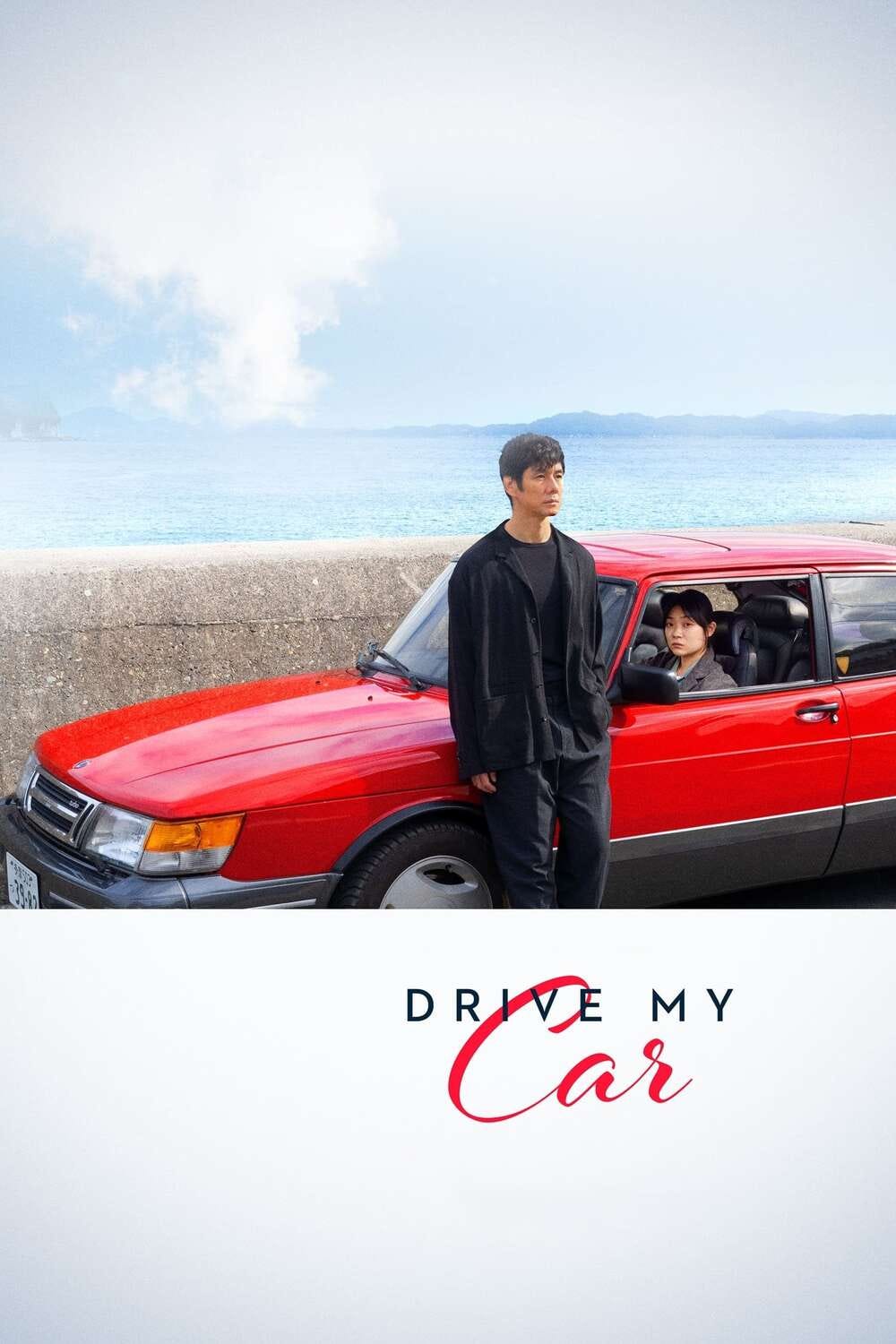
Drive My Car (Ryusuke Hamaguchi, 2021). In 2021, my friend and I went to see Drive My Car in theaters under the false belief that it was a slow-burn mystery thriller. Three hours later, we left the theater, said “what the hell was that?” and forgot all about it. In 2026, I read the short story on which it was based, in Haruki Murakami’s Men Without Women collection, and took it as my sign to revisit the movie. I watched it with six people; after an hour, four of them left. One of them said, “When is the movie going to start?” I don’t understand those people at all.
If I had to express the philosophy of Drive My Car, it would be that each of us has to save ourselves, but we don’t have to do it alone. The movie centers on two characters who have tried to save themselves for so long and failed. When they meet, they learn that the transformative power of seeing and being seen can heal you in a way you didn’t think was possible.
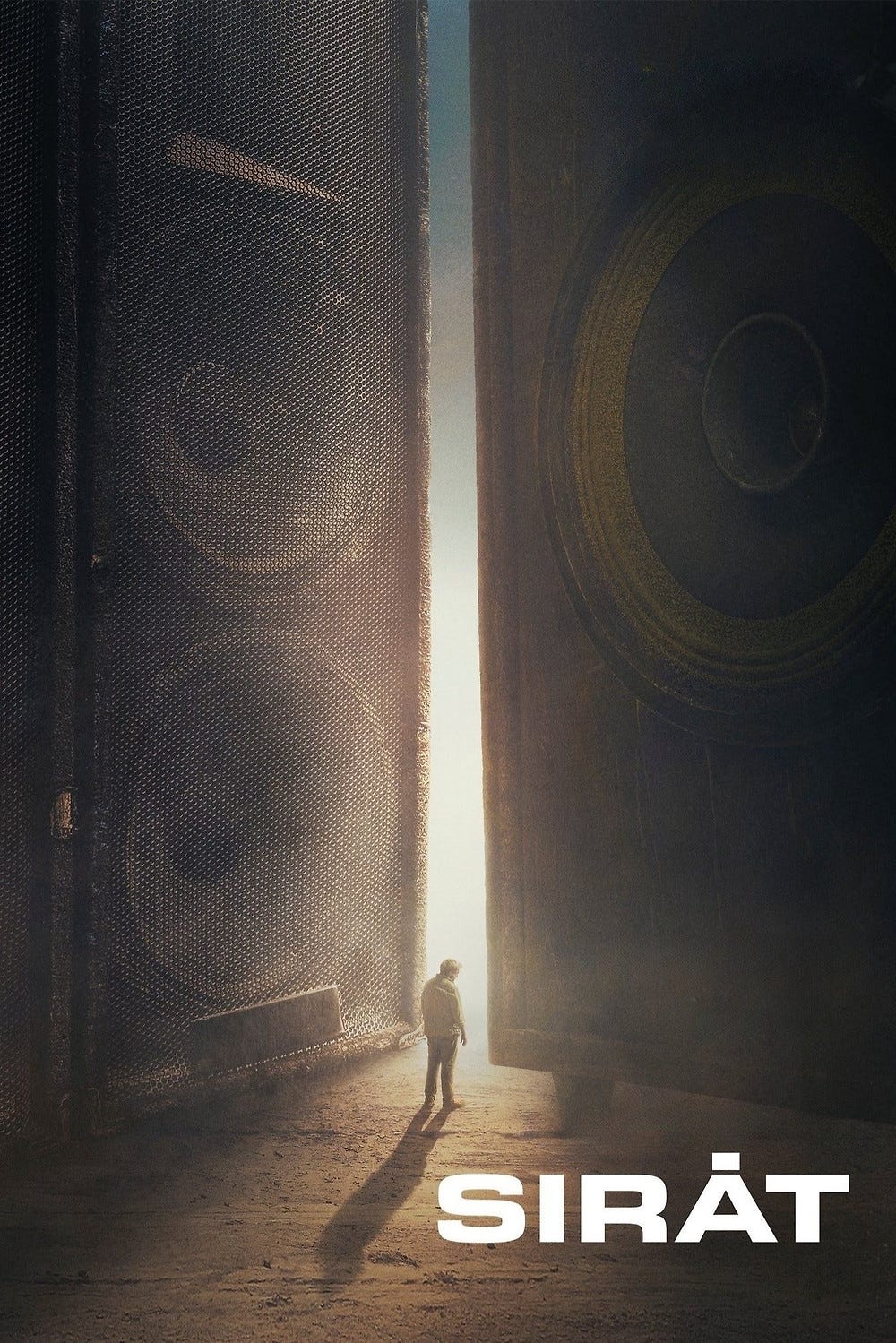
Sirat (Oliver Laxe, 2025). You probably shouldn’t watch this movie, but I loved it. A father goes to a desert rave, looking for his daughter who went missing months ago. He joins a group of ravers heading to another desert rave, hoping to find her. Meanwhile, a war breaks out. From there, everything goes terribly wrong.
I am a certified hater of trauma porn. I don’t like stories where people suffer without cause, where bad things happen because something has to happen and bad things are things that can sometimes happen. Later in this roundup, I will rant about another movie which featured a lot of suffering with no apparent point. But Sirat treats the suffering of its characters the way I imagine God treats suffering – with a loving indifference that is born from the knowledge that all of us are on the same journey, one way or the other. Suffering is a feature of life, to be neither escaped nor feared. I don’t think I have a religious bone in my body, but that treatment was very powerful for me. It helps that the desert aesthetics are outstanding, and the soundtrack is the trance music of the apocalypse.
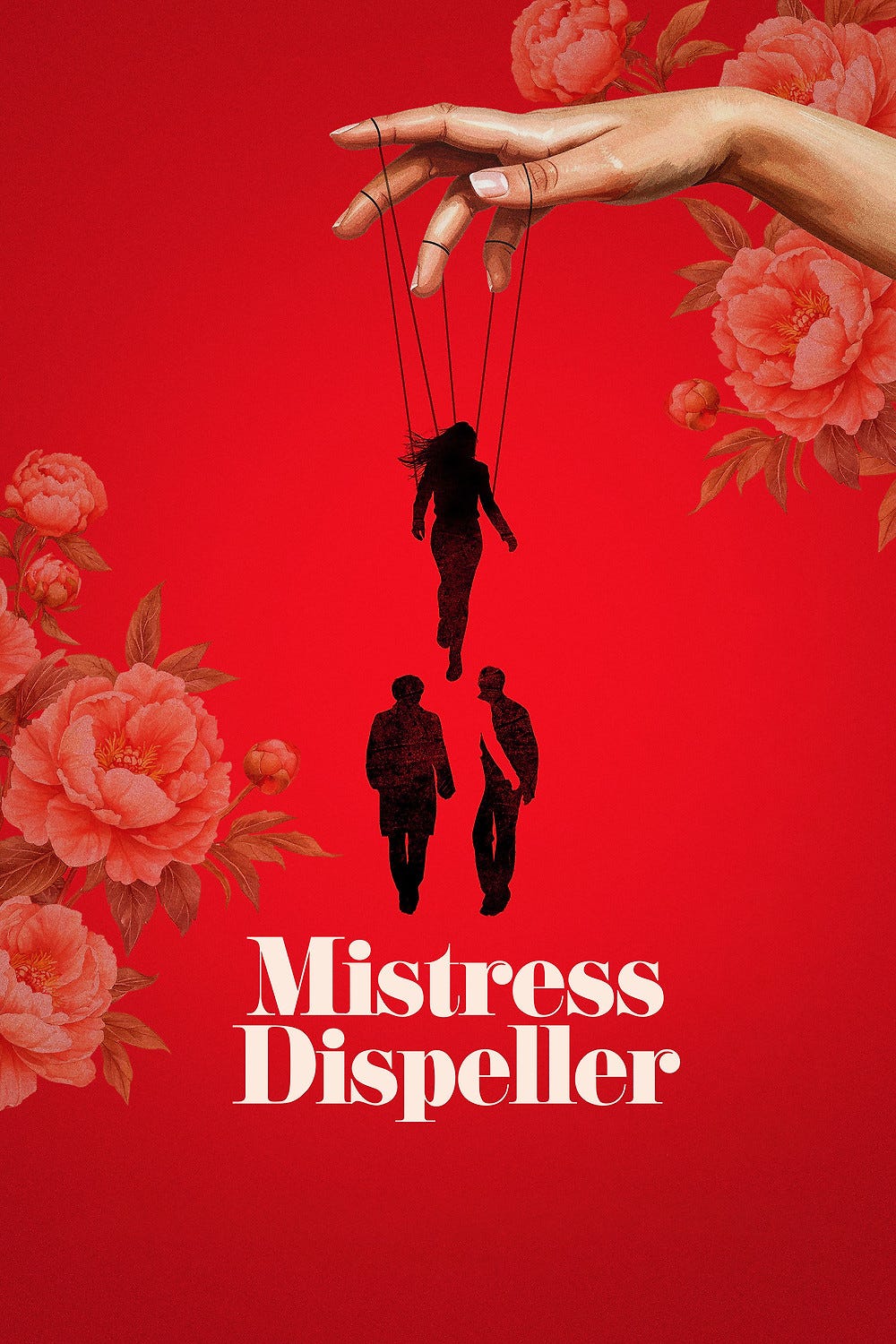
Mistress Dispeller (Elizabeth Lo, 2024). The premise of Mistress Dispeller is interesting enough as fiction, and then you find out it’s a documentary. In China, there is a market for mistress dispellers: people hired to go into marriages wrecked by an affair and end it by any means necessary. Convince the husband to leave the mistress, convince the mistress to leave – whatever it takes to bring the marriage back from the brink. And to repeat, this is a documentary – the people in the movie are not actors, they are real participants in an affair and the mistress dispelling process. I still don’t know how they filmed this.
There are three characters in this drama: the wife, the husband, and the mistress. Surprisingly, the one I appreciated the most was the mistress. Of the three, she’s the only one willing to look reality in the face. The other two go to great lengths to save face, using intermediaries and veiled language, never saying what they want to each other directly. The mistress is the only person who speaks plainly and without deception. She knows that she is pining for a man who treats her better than anyone her own age, but that she can’t have him. She doesn’t try to break up his family, but she also doesn’t pretend she doesn’t love him. I couldn’t help but respect that.
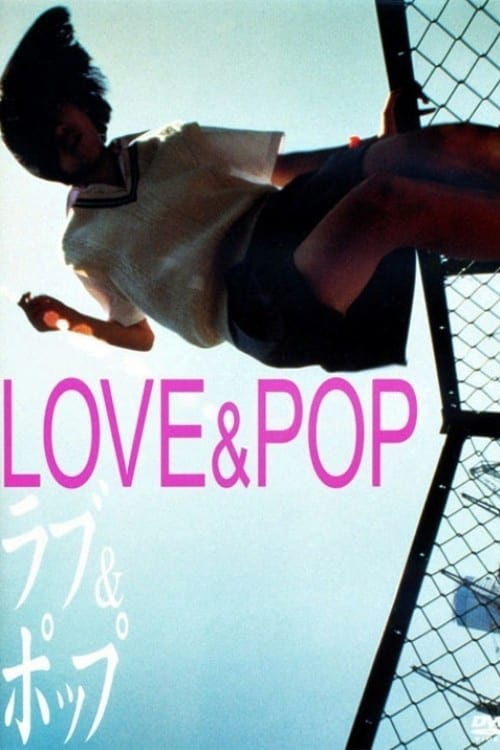
Love and Pop (Hideaki Anno, 2000). A group of teenage girls in 1990s Japan go on dates with older men for money (”compensated dating”). Our protagonist, Hiromi, decides she really wants an imperial topaz ring, and resolves to go on dates that same day until she can afford it. The dates get progressively stranger, more concerning.
The action of the movie is all about compensated dating and the tense, bewildering, frightening situations she gets into. But the heart of the movie is her friends – her friendship with the other girls in her group and their collective journey of growing up. She reflects on how the others have figured out what they want and started to pursue it, but she hasn’t. Maybe that’s why she’s so drawn to the ring. Wanting something is more important than whatever outlet that want is directed towards. And maybe that’s why I sympathize with her doing something so objectively stupid and risky. Because learning to want things is scary.
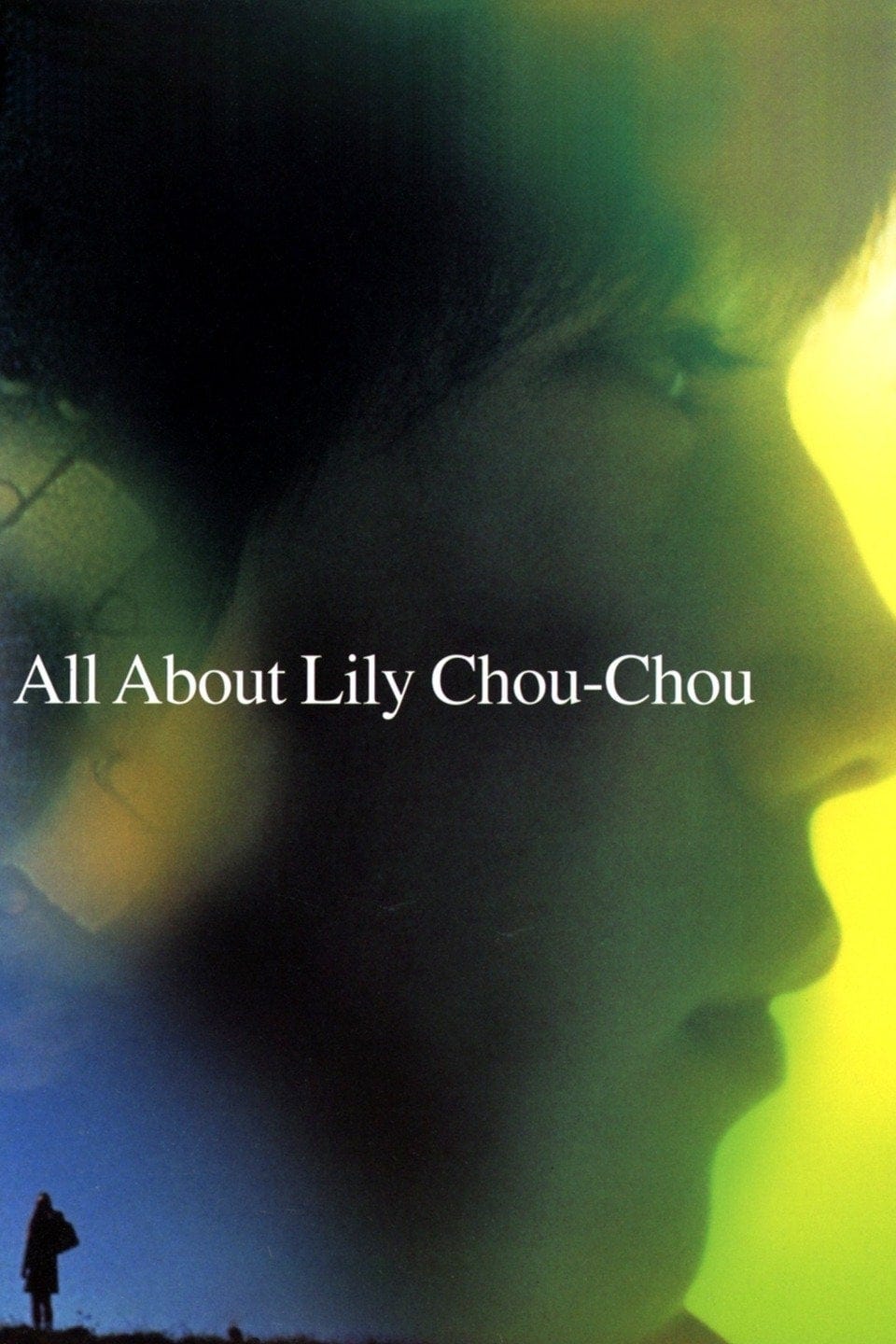
All About Lily Chou-Chou (Shunji Iwai, 2001). I don’t want to include movies I hated on these roundups. I write this roundup for fun, after all, and it’s not fun to write about being a hater. But it’s still worth it if it helps me process an experience. And if there’s one thing I can say about All About Lily Chou-Chou, it’s that it was definitely an experience that I need to process.
The movie is about teenagers in Japan growing up in an environment of rampant bullying and manipulation. There is no safety in being a teenager. There is only coping. Our protagonist’s preferred cope is the music of pop artist Lily Chou-Chou. He runs a message board dedicated to her music, and he listens to her albums to get him through the worst points in his life. When his best friend undergoes a personality change and becomes a manipulative sociopath, when he is bullied and humiliated, when unspeakable things happen to people he cares about. He returns to Lily Chou-Chou and he just copes.
But there is no end to suffering in All About Lily Chou-Chou. There is no growing up, no resolution, no point. And I could not stand that. I still get angry thinking about the movie. Uncharacteristically for me, I searched through Letterboxd reviews from people who said it changed their lives, looking to get over my disgust reaction. But I couldn’t. With apologies to Chekhov, I am not yet a chemist; there are things in this world that are unclean to me, and this movie is one of them.
Other
I’ve been replaying Disco Elysium, a game about an alcoholic amnesiac cop who solves a murder. This replay has nothing to do with my previous experience of the game, and everything to do with Jacob Geller’s gorgeous video essay, Searching for Disco Elysium. Geller explores what it means to live in a city using the game’s setting, the broken city of Revachol. Revachol was ruled by a monarchy that was overthrown by a communist revolution, which was in turn overthrown by an international capitalist coalition. It is enduring a conflict between a powerful union and a mega-corporation. Its identity has fractured into a thousand pieces, and each citizen of Revachol lives in their own version of that magnificent catastrophe. But all of them look out at this skyline:
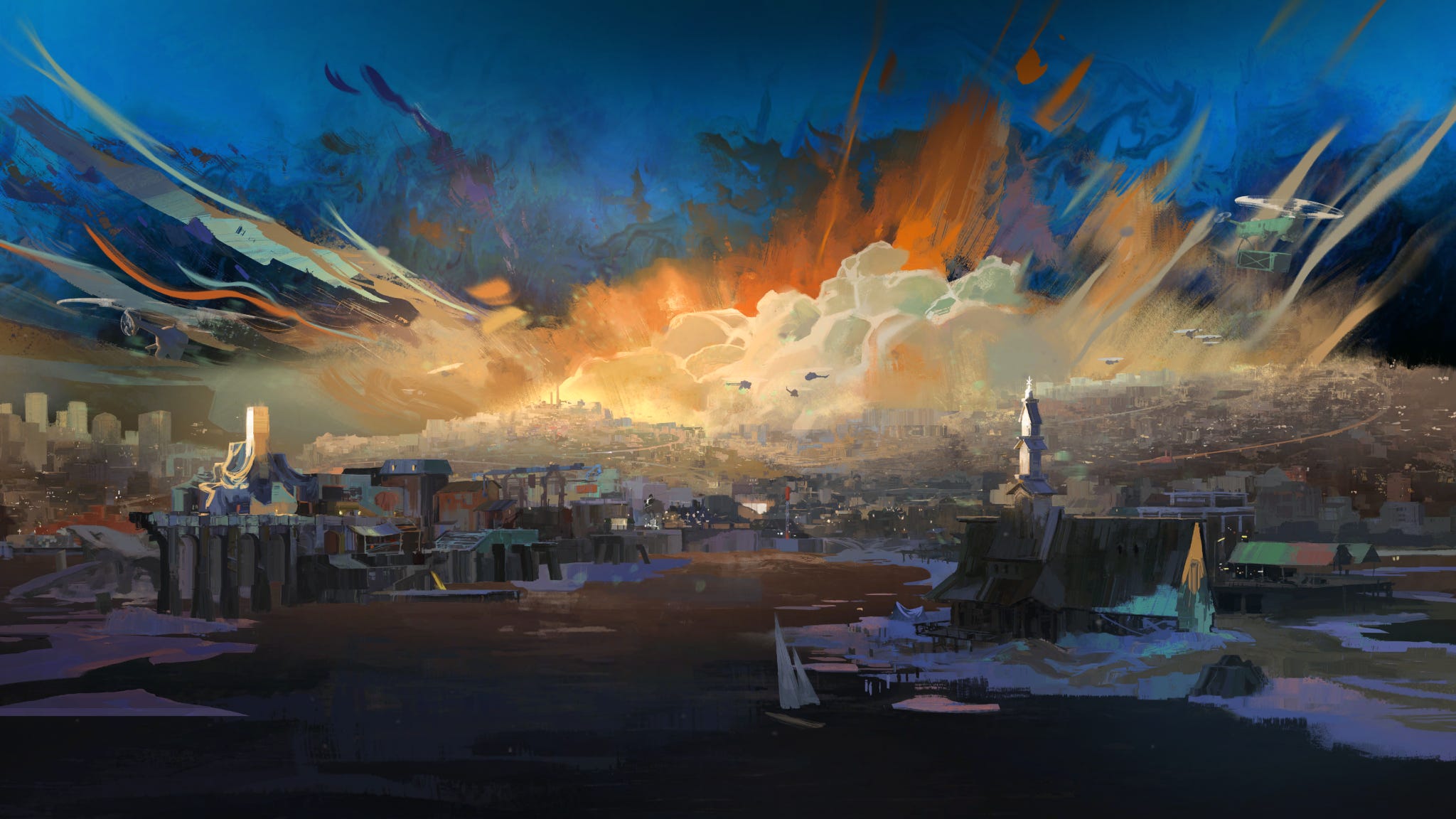
I don’t live in the city where I was born. If I went there today, it would be foreign to me. Nor do I live in the city where I grew up. It is not yet foreign to me, but soon it will be. Whenever I think about the places I’ve left behind, I don’t know what parts of me I’ve left behind. Nor do I know what I will leave behind in the future. Like everyone, I have my own experience of Berkeley. To me, Berkeley is meeting eccentrics at Teance Fine Teas and amusing myself at weekly wine tastings and seeing the setting sun from a grimy graduate student lounge and gazing into warm homes on nightlit streets. When I leave Berkeley – as I inevitably will – will I leave all of this behind?
Ever since I watched this essay, I’ve started going on walks where I just observe the city. I drink it in greedily, knowing that this magic is only for today.